
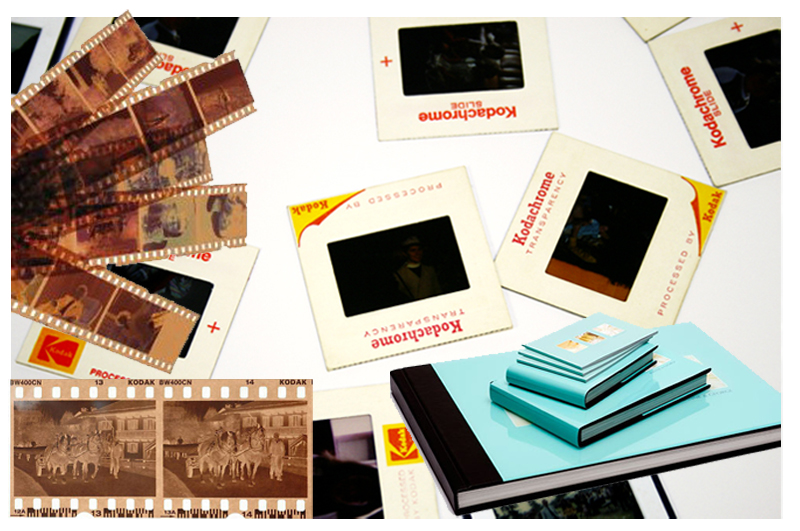
Pictorium Photoshop Monkstown Dublin Professional Photo and Image Scanning Service. Digitise your Slides, Glass Slides, Negatives, Hard Copy, Photo Albums. Print Canvas, Framed. No limit

Sharon and team provide a fabulous, professional and friendly service! I used the scanned photos for my Dad’s memorial celebration, on loop on a large screen in a function room – the memories filled the room with stories, laughter and love. Family, friends and old colleagues alike felt like my Dad was in the room celebrating with us! Thanks Sharon. Kay Dee


Scan / Digitise your Photos and Protect Them For Life

We offer a full Professional Photo Scanning Service. 

Your photos are precious memories, unfortunately they will discolour and fade over time so we would recommend digitising your photos to keep them safe for you and future generations to enjoy.

We digitise/scan in your original photographs, slides, film negatives, positives, glass slides, lithographs, canvas, artwork etc. For a full list see below.

Yes, we do scan Photo Albums.

We are very different to most scanning / digitising services. We scan and digitise  your photos professionally to the highest resolution (detail) so the quality is second to none. This means you can enlarge your photos without loosing any detail (i.e. not becoming blurred).

Rest assured that we treat your photos, slides artwork etc. with the utmost care. They are not affected by the scanning process and will be given back to you after scanning is completed.

Resolution (Detail)

Scanning in photos professionally is all about capturing every detail from your image. This is called resolution.

As a photo restoration specialist part and parcel of what we do is scanning photos, slides, artwork etc to the highest resolution.

Scanning in at a very high resolution has a twofold advantage:

Enlarging You can, for example, enlarge a 6”x4” photo to a 16”x12” photo without loosing any detail. We regularly enlarge Passport size photos and Photo Booth photos.

Low resolution photos when enlarged will be of a lower quality resulting in loosing their clarity becoming blurry.

Restoring We capture every detail in a photo, even details that are so small that we cannot see them. 

If you ever want to restore the photo and/or fix the discolouration, the quality of this scan will aid in giving you the best results.

Where you have a faded photo, you will now see all those important details in their faces: like their eyes, mouth even the shading in their face. The detail of her wedding veil and dress…

This means that you can enlarge & print your photos without loosing quality. Whereas lower resolution (detail) ends with photos that are blurry/grainy.

Automated Correction

Unlike many services we do not use automated image correction software e.g. Digital ICE* & Auto Colour Correct bundled into scanners which often ends with poor results. This can leave your photos discoloured and with a blur. 

Every photo is unique and should be treated as so. Because of this we would always recommend raw scans and then when needed using Adobe Photoshop or Lightroom to colour correct and restore.

Pictorium would never recommend using auto correction.

*Digital ICE Technology The software tries to predict what is dust. So does end up blurring / removing the finer details of your photos i.e. shine in a persons eyes, facial and hand details, lace, watch faces etc. So when you enlarge or print your photos these areas are now blurred. 

Auto Colour Correct This software does struggle with accurate colour correction giving very inconsistent results. It can result in changing colours giving artificial looking colours.

Quality of Service

Your photos are precious and need to be treated with the utmost care. They can be easily marked by damaging oils on our fingers. So to keep your photos safe we always wear our lint-free gloves when handling your precious pictures.

All work is done in-house and each and every photograph is treated with the utmost care.

We crop your photos for you. We ensure the correct rotation during the scanning process.

When your photographs are scanned they are then quality checked by us before you receive them.

Cataloguing

We offer cataloguing at no extra cost. If you would like to batch your photos by event/occasion/decade we will catalogue them for you.

Storing / Receiving Your Photos

USB Stick • Eternal Hard Drive • Wetransfer • Dropbox

We regularly zip and dropbox/wetransfer photos to customers.

We also email photos via wetransfer.com on behalf of our customers (no charge) – very popular when your family or friends live overseas.

Giving you that extra security… We will also, with your permission and at no extra cost, keep a copy of your images on our own server. They would never be accessed unless requested by you.

What Do We Scan?

We have been working with Customers nationally and internationally as well Artists, Painters, Photographers, Museums, Historians, Genealogists, Organisations, Sports & Social Clubs, Schools… for decades so you can imagine we have see it all.

We offer a professional scanning / digitising service for:

Photos Hard Copies, Loose and in Photo Albums from Passport size up to large format. Passport Photos and Photo Booth Photos.

Albums We can take the photos out of the album and put them back (upon request). In some Wedding Albums and older Albums the photos are stuck in the Album. We will scan them in directly from the Album.

Artwork Original artwork including Paper, Watercolour and Canvas.

Film 35mm Slides/Transparencies (110, 126, 135 35mm), Film Negs etc in all sizes.

Glass Slides Photographic Glass Slides, Painted Glass Slides (Magic Lantern Slides).

Documents & Letters War Memorabilia, Historical and Personal.

Old Style Lithographs, Daguerrreotypes, Ambrotypes & Tintypes.

Resolution for Types of Scans

Hard Copies, Slides, Negatives & Film

PHOTOS Resolution: Up to 1,200dpi, depending on the size of your photo
Slides, Negs and Film Resolution: Naturally 3,200dpi. Up to 6,400dpi

We work with Hard Copies, Slides (+ glass slides), Negatives & Film on a daily basis with no limit on the amount we scan.

Lithographs, Daguerrreotypes, Ambrotypes & Tintypes

Resolution: Up to 1,000dpi, depending on the size of your image or portrait

These styles of printing date back to the 1800s!

Not only do we scan your precious portraits and art to the highest possible quality we can also restore them.

We are asked on a regular basis how can you tell the difference. We have put together a quick guide to the different types and their distinguishing features.

See “Older Photograph Types_A Quick Guide” below  for more information. If you ever need any help or advice please do call or email us.

Scanning Photos Yourself

There are a variety of ways to “scan my photos”. But unless you have a high end scanner and the know how, the quality will never be the same as a professionally scanned in photo, so please don’t throw away your originals until you know you have the best scans possible. 

Here’s why:

Home Printers with Scanner Adapters

Scanners attached to home printers tend to only be good enough for scanning in documentation. You will not get the level of quality that you need to enlarge and/or print.

Mobile Phones

Mobile phones are great for taking a natural photo but not a “photo” of your photos or even using an app to digitise your photos. There are a myriad of reasons why. 

• They will never be able to take a photo to the same quality/resolution as a high res scanner.

• A camera phone will not have as big of a sensor as a digital camera. This allows for more light to be let in as well as more options resulting in crisper, clearer photos. 

• Namely it is nigh on impossible to take the photo without letting light in which will reflect on the photo itself putting a cast over the photo. 

• Unless you can take the photo exactly straight on the photo will be misaligned with the end result being a distorted photo.

Sending via Text WhatsApp etc

If you have a high res image that you want to send to have it restored or even printed. Always email the photo.

WHY When you email a photo (depending on your phone) your phone will automatically either a) send the Actual size file or b) ask you if you would like to send a “small, medium, large or actual” size image. Always choose “actual” size.

When you send via text, WhatsApp etc. your phone automatically sends a lower quality version of your photo equivalent to a small or medium size image. 

Print

Why not print your favorite photos? We can scan and print your photos to photographic paper, print and frame them or print them onto canvas.

Older Photograph Types_A Quick Guide

LITHOGRAPHS 1796-1950s

Surface: Paper and/or backed onto canvas
Lithography was invented around 1796 in Germany by an otherwise unknown Bavarian playwright, Alois Senefelder, who accidentally discovered that he could duplicate his scripts by writing them in greasy crayon on slabs of limestone and then printing them with rolled-on ink.

It was very popular with painters who would use black chalk or charcoal. It is an original piece of artwork with the signature, usually located on the back.

Lithographs v Print
By Look A lithograph will show signs of irregularities in the dot pattern with offset lithography leaving a dotted circular pattern in rows

By Touch You can also compare a lithograph vs. print by touch. Rub your hand lightly over an original lithograph, and the surface should feel slightly raised. Prints will always have a completely flat surface because they came from a printing press.

DAGUERREOTYPES 1839-1860s

Surface: Highly polished, mirror-like silver
Invented by Louis Daguerre and introduced worldwide in 1839 and was the first publicly available photographic process.

They are shiny to view and were made on highly polished mirror-like silver-coated copper plates and would come in protective cases or sleeves, often made of leather and lined with silk or velvet.

You have to tilt them at a 45 degree angle to view them. Depending on the angle at which you view them, they can look like a negative, a positive or a mirror.

They became less popular with the advent of the less expensive Ambrotype in 1860.

AMBROTYPE 1854-1880s

Surface: Glossy often behind glass
Patented in 1854s and superceded the more expensive Daguerreotypes in the 1860s.

Like the Daguerreotype they be found in hinged protective cases. They are typically housed in miniature hinged cases made of wood covered with leather, paper, cloth, or mother of pearl.

They are on glass. Backed with a dark substance (such as varnish or paper) they look positive, but when the backing starts to deteriorate, you can often see through the glass.

TINTYPE 1853-1930s

Surface: Iron, semi-glossy
Patented in 1856. They are actually printed on iron, not tin. Unlike a daguerreotype, tintypes are not reflective.

Most Tintypes are not found in a protective sleeve or case. Cased tintypes may be difficult to distinguish from cased ambrotypes.

Weight can help to differentiate, but a magnet may be used to conclusively identify the tintype’s iron support.

We are here to help, so call us and see how we can digitize your memories.

Scanning photos for customers nationwide via • Our ShopPhone • Email • Facebook • Post.